Why a fall from a roof?
Falls from height are among the main causes of fatal accidents in construction and maintenance work. In most accidents the equipment is on site; what is missing is using it correctly at that moment. The harness is on but not clipped, the guardrail is there but one section has been removed, the job will take "two minutes".
A good training film focuses on exactly this moment: why someone who knows the rule skips it.
A scene, not a slide
Everyone knows the sentence "A safety harness must be used when working at height." But a worker who has seen the moment a roofer's foot steps into the void as a tile slips never remembers that sentence the same way again. A film conveys not information but a moment.
The four parts of a good safety film
- Wrong: A familiar moment on site. Not a malicious character, but an ordinary worker in a hurry.
- Result: An accident or near miss. Short and clear.
- Right: The same scene, this time with the right behaviour. The viewer sees that the difference is a single movement.
- The line that sticks: The film's final frame. One sentence, e.g. "A harness only protects if it is clipped on, not just worn."
Writing the script from the site
The most convincing scenes are written on site, not at a desk. Before you start the script, collect the following:
- Near-miss reports and accident records from the last year (with names removed)
- Work at height that scores highly in your risk assessment
- Workers' own words: "Nothing will happen", "It's a two-minute job", "The rope won't reach"
- Photos of the site: roof type, anchor points, lifeline, scaffolding
When a worker's own words appear in the film, the audience recognises the scene. When they see their own roof and their own vest, they take the message personally.
Telling the outcome without showing violence
Showing blood and injury shifts attention from behaviour to fear; some viewers look away. There are more effective ways to tell the outcome:
- The camera shows not the person falling but the empty shoe or the swinging lanyard.
- The picture goes dark, and only sound is heard.
- The picture rewinds: "Let's go back one second."
Example: a 75-second scene list
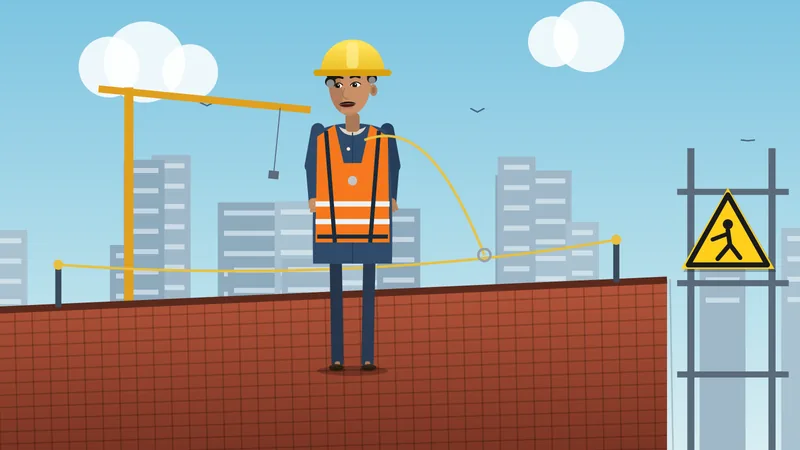
The roofer is working on the ridge; his harness is on, but the lanyard is not clipped to the lifeline. A tile slips and the screen goes dark. The picture rewinds; in the same scene the roofer clips the lanyard on, and his colleague checks the lock. The tile slips again, and this time the lanyard holds him. On the closing card, one sentence and a question to ask in training.
How should the film be used in training?
A film does not end training, it starts it. Here is how we suggest using it:
- Play the film once without stopping.
- Ask: "The roofer had a harness. Why did he fall?"
- Play the film a second time, stop at the rewind moment and talk about similar spots on your own site.
- Hang the sentence from the final frame next to the anchor points on site.
A note on legislation
Obligations for working at height are set out in Turkish Occupational Health and Safety Law No. 6331 and its regulations. A training film does not replace statutory training; the film's messages must be consistent with your workplace risk assessment and approved by your safety specialist.
Checklist
- Does the film focus on a single behaviour?
- Is the character an ordinary person rather than malicious?
- Are the site, equipment and words from your own site?
- Is the outcome clear without showing violence?
- Is there one clear sentence in the final frame?
- Is the question to ask in training ready?